01 / Start here
Indoor Start
Start with the right questions. A compact introduction to light, climate, roots and the equipment behind an indoor environment.
$0.00 USDExplore ↗
SCIENCE · KNOWLEDGE · PRACTICAL SOLUTIONS
A complete guide to indoor plant cultivation.
From plant biology to modern technology — everything in one place, clearly explained and easy to apply.
 One connected system.
01 / THE BIG PICTURE
A lamp, a fan and a bottle of nutrients do not work in isolation. Neither should your knowledge. Learn how light, climate and the root zone connect, so you can read the whole environment with greater confidence.
02 / MAXTHORNE LIBRARY
Start with the essentials, plan your first space, or go deeper with the complete reference. Three guides. One connected approach.
01 / Start here
Start with the right questions. A compact introduction to light, climate, roots and the equipment behind an indoor environment.
02 / Plan your space
Plan your first indoor space with a clear equipment checklist and an understanding of how its parts work together.
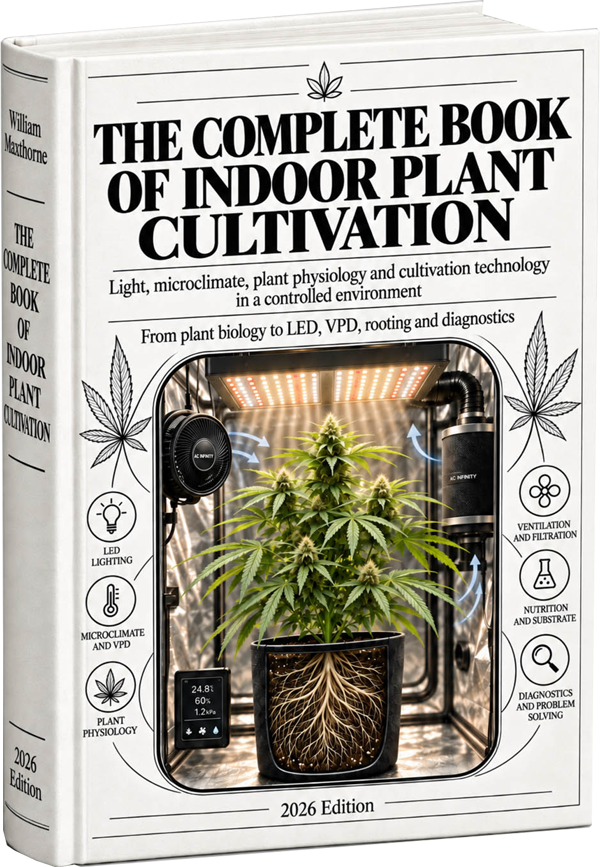
03 / The complete reference
From plant biology to modern technology — light, microclimate, roots and diagnostics, brought together in one clear reference.
03 / INSIDE THE COMPLETE BOOK
From plant biology to modern technology — light, microclimate, roots and diagnostics, brought together in one clear reference.
Look insideUnderstand the processes behind plant responses.
Make sense of spectrum, PPFD and daily light.
Connect temperature, humidity and plant water use.
Explore the balance of water, air and nutrients.
See how exchange and circulation work together.
Investigate causes using observations and context.
THE MAXTHORNE JOURNAL
Explore the foundations of a controlled growing environment.
Roots, leaves, vascular tissues and stomata form one connected transport system. Understanding it changes the way we read every measurement.
Read article ↗DiagnosisSimilar leaf symptoms can result from very different causes. A reliable diagnosis starts with the whole system and a timeline.
Read article ↗LightPPFD describes the photon flow reaching a surface; DLI adds time and shows the total daily light dose. Here is how to read both without turning them into magic numbers.
Read article ↗SubstratesThe media may look similar from above, but they store water, air and nutrients in very different ways.
Read article ↗VentilationAir exchange removes heat and moisture, while circulation reduces local gradients around leaves. These are related but different jobs.
Read article ↗MicroclimateTemperature and relative humidity are not separate targets. VPD connects them and helps explain the evaporative demand placed on a leaf.
Read article ↗MAXTHORNE PRESS
Put the pieces together — from the first photon to the root zone.
Find your next book